

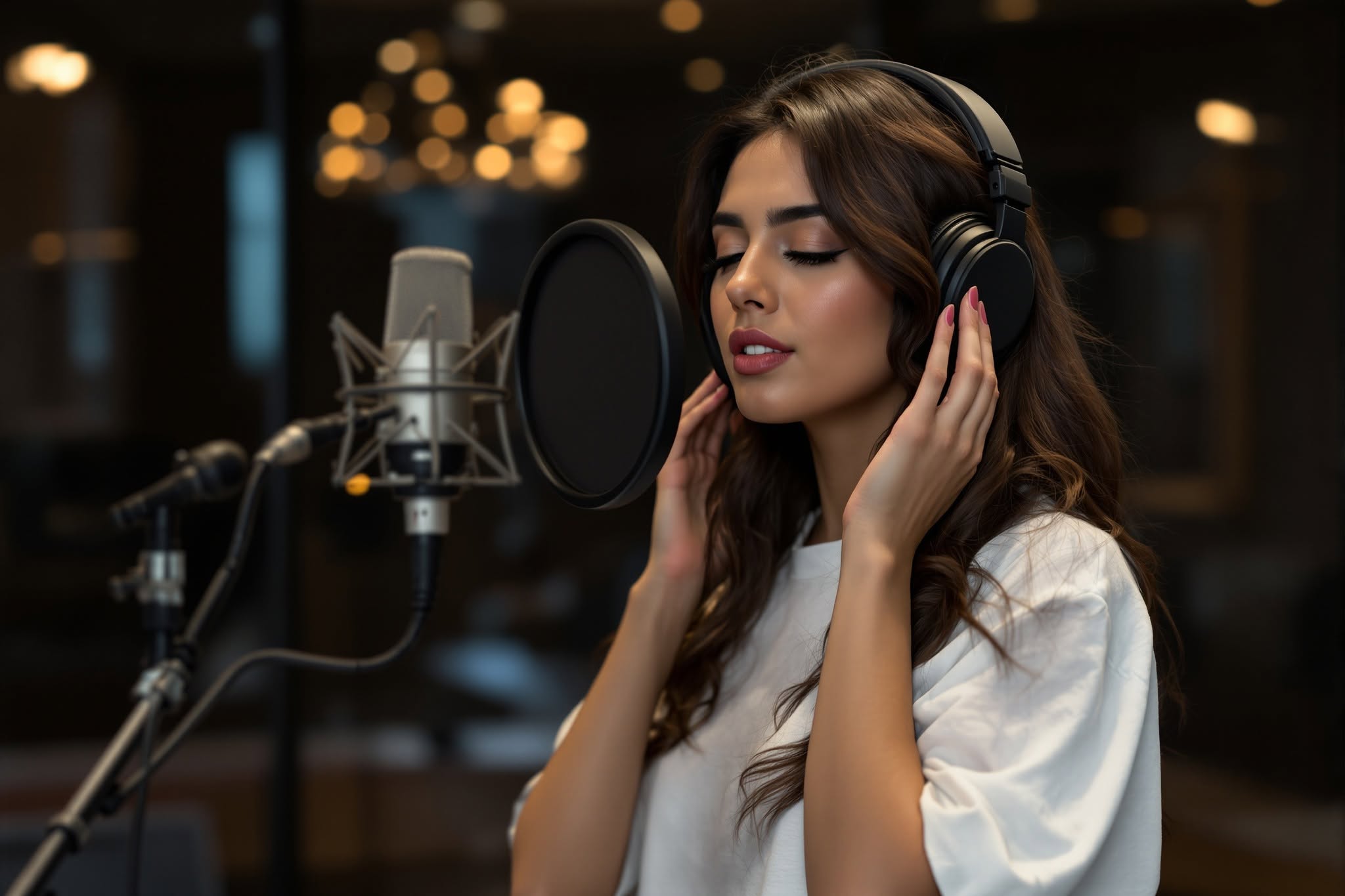
Behind the soft vocals and cinematic soul of Isabella Delgado lies a fascinating creative process, one that blends human storytelling with the tools of artificial intelligence. In this exclusive interview, the mind behind the project opens up about the origins of the music, the meaning behind « Shame », and what the future holds for the Isabella Delgado universe.
How did you start making music? What was the turning point?
Isabella Delgado: I have been a songwriter since I was 20 years old, after a major accident and spending a year in recovery. Now 56, I do have a very basic knowledge of music, but my ability to write lyrics for different artists never progressed, as I did not have time to learn to play anything proficiently.
I would still love to have the time to sit and learn to play guitar, but my career has been in research, product design, and software engineering, and day to day I run two software companies.
The music project started by accident, as I was creating an AI workshop for small business owners in my role as a technology trainer, and someone suggested I should run some of my written lyrics through this new tool called Suno.
For the sake of the training, I created a digital artist with AI images and some AI-generated songs and uploaded it to YouTube. It was just for the workshop, but it was public, and within a few days the 3 or 4 songs had received thousands of views and over 300 subscribers. After this, I spent a year experimenting with concepts for different artists, like Isabella, to test different scenarios for each one. Each grew in the same way as the first, some better than others. In July 2025, a year after the initial concept for the training workshop, I started putting more effort into the project, designing the brands, the marketing, and building a fan base and community for each artist, Isabella being one of the first. My first love has always been music, and before the accident I used to DJ and remix tracks. With the capabilities of AI, I can now revisit what I always wanted to do with my songwriting.
What inspired you to write « Shame »? What was the starting point?
Isabella Delgado: The song « Shame » continues the story across the three albums, starting with « Complicated Lover », « Toxic Lover », « Next Weekend », « A Thousand Times », « Lost », « Broken », « No Love Song », and « Shame », ending with « Stronger Now ».
« Shame » outlines the inner feeling of loss and how a partner treated someone in a toxic relationship, and the realisation of being hurt and left alone as he walks away. « Shame » is all about the denial of a meaningful relationship that has gone bad, realising that as one half, you were in denial, and now you only have shame for how you feel.
Each part of the story in each of the songs covers the emotional trauma and bitter breakup, with the feeling of loss and pain while having unanswered questions. Future albums will continue with the theme and the story of recovery, new love, personal growth, along with other individual topics.
Could you describe your songwriting and composing process? What role does AI play in that process?
Isabella Delgado: My lyric-writing process is pretty consistent. I tend to start with a pad and pencil and scribble ideas; again, with the pencil I jot down outlines of songs. Step two is to formalise the structure of the song. AI is never used for lyrics, only for putting the lyrics to music. I use Suno to build the initial track, and often hum the melody into an audio track or sing out the lyrics to get the structure and arrangement, but I am not a performer or singer in any way. Through the writing, though, I know instinctively how the song should be arranged, and I often get a basic tune in my head.
This is where the AI then comes in. The first step is to get a full generation of a song. Then there is an iterative process of fine-tuning lyrics and arrangement until a pre-production copy is ready. The next step is to use AI Studio tools to clean up the track and remove any bits and noise that should not be there.
After this, there is a double remastering process, again with AI tools, to lift the audio quality for a production copy. I am fully aware that the production copy with AI is nowhere near the same as a high-quality studio-produced copy that would be performed, but the project was never about getting studio quality, more about proving what could be achieved by someone with no real understanding of music production.
I see this as a content generation process for the artists, and an ability to demonstrate the songs I have written to a public audience.
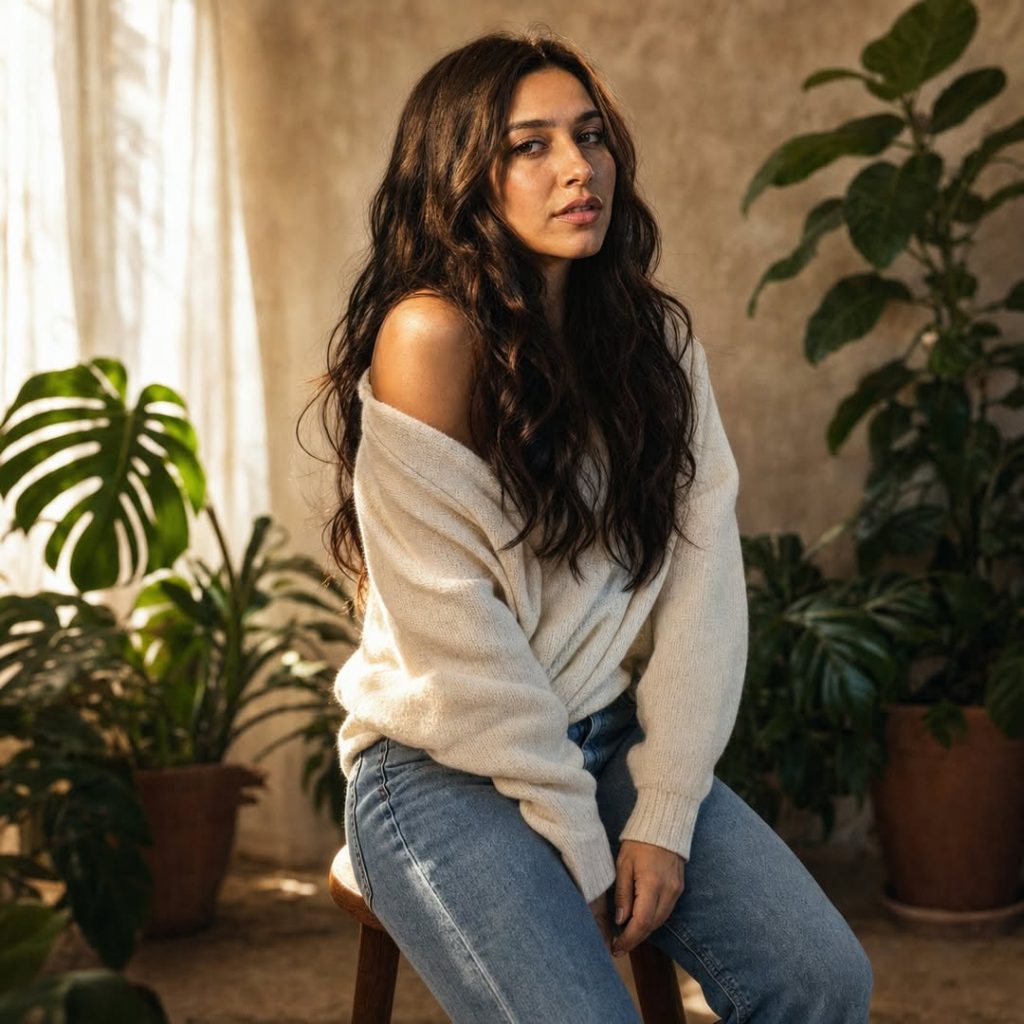
Do you understand why some people are still somewhat reluctant about the use of AI in music today?
Isabella Delgado: Yes, 100%. Aside from the lawsuits, which I cannot really comment on as I have no legal understanding or experience, AI in music represents a change, and a lowering of the bar for everyone to participate in music creation.
Sadly, this has led to auto-generated songs and lyrics (slop) being pumped onto social media channels and streaming services, with a promise that there is a pot of gold just around the corner for all who participate. And that it’s the new get-rich scheme, and all you have to do is release 100 songs in a week and you’ll get rich in the music industry from streaming songs.
We all know that this is not true, and it can take years to build an audience for any product you create.
I do feel that this gives a bad name to AI music in general, and I see it as a tool that enables me to create and work on the songs I have written.
As the music and social media companies grapple with this new creator music industry, I’m sure we will all continue to see the growth of labelling on generative content, with an « AI » label or an « AI was used » label. This I fully support, which is why all my artist channels are called « Digital Artist », and each video description has an explanation, while on each platform I mark as AI where available.
I am in no way trying to compete or pretend that what I’m creating is somehow a real human artist in a studio; this is a fictional digital artist project. I’m doing this mainly to release my songs and let a public audience give me feedback.
AI is here to stay and will impact many things we all do in many different ways. Having spent 28 years in the software industry, I have seen a lot of change in technology, but nothing like AI, as it is advancing rapidly, with few guardrails.
I do believe that long term, the use of this type of technology will be normalised, and as realisation dawns for those who churn out songs, the mass production of AI-written songs will slow over time, as there will be very little reward for those who do it.
What is your greatest strength as an artist? And your biggest weakness?
Isabella Delgado: I would not class myself as a musician or an artist, more a music content creator, as I believe creating music with AI tools is more about the product being created and not the art of making music. I don’t really see how the two can be compared, apart from being music-related, as the process is very different.
I see this project as creating marketable products with the songs I write, to test the concept of fictional music artists.
My strength in business is creating product brand and content and building audiences for a given product. I really enjoy writing the songs I create, but I fully understand that not everyone will like them. Still, we have sold albums and are slowly building an audience for each artist created.
I guess my weakness is having no real knowledge of the music industry, but this could also play as a strength, as it gives me an opportunity to take a completely different approach to creating manufactured artists.
Many people have asked me why, and why bother, but it all started as a hobby and then grew. I’m one to always say « why not », and I really enjoy the process.
What is one thing you simply couldn’t live without on a daily basis?
Isabella Delgado: Coffee… okay, jokes apart, I think having the opportunity to work with and understand new technology, and to be able to research, is my day to day. For me, having the ability to continually learn something new at 56, after a full career in software design and development, is my own blessing.
What are the last three tracks you listened to today? No cheating!
Isabella Delgado: I listen to a whole range of different music, which helps me learn more about what I’m doing. I’ve always been a fan of rock music and country rock, but I have a wide taste: yes, I do listen to my own tracks, along with Guns N’ Roses‘ early albums, Erasure, Pet Shop Boys, Taylor Swift, Lewis Capaldi, and Alex Warren.
So far today, I’ve been listening to Isabella’s new album « Lost » to make sure the release sounds okay, Van Halen, and a few tracks from Taylor Swift.
Why did you choose to call your latest album « Broken »?
Isabella Delgado: « Broken » is the third album in the series, and it tells the main story. « Broken » represents the realisation of the breakup’s reality; it all started with « Breathless », then « Lost ». We are working on a fourth album for later this year or early next year that moves past the reality of being emotionally broken and moves the story on to growth and independence.
What would an Isabella Delgado live performance look like?
Isabella Delgado: That’s a very interesting question. Eventually, it would be great to go from digital to stage and tell the story. We would probably make it more of a stage show than a concert, similar to the concept of using Abba‘s music in Mamma Mia!, but that’s more of a pipe dream, as we would first need to find an actress, or actresses, to play the role in the story.
What are your goals for 2026?
Isabella Delgado: The music project started in July 2025, and we currently have six artists or styles. The plan for the rest of the year is to continue growing each of these and maybe introduce a seventh and eighth artist.
The initial business plan was three years and ten artists, all monetised on YouTube and Facebook, with streaming revenue helping to fund the growth of the business as a whole. That said, this project was never about making huge sums of money; it was about research, response, and understanding.
This year, I would like to formalise the business into a limited company and, at some point, get to a place where it can pay me a basic salary. But overall, it’s about continuing what we’ve started and enjoying the process.
When we all went through lockdown and Covid, I had a moment and thought to myself: do I really want to spend the next 20 years working in software? You could say I had a moment of realisation that I could do something different. I was going to focus on writing books and podcasting, while training people how to use AI correctly, but my love for music and songwriting was reignited with AI, and for now, this is my focus.
—
Join Isabella Delgado on socials :
